Pneumatic Riveting Machine – Surface Treatment Technology Guidelines
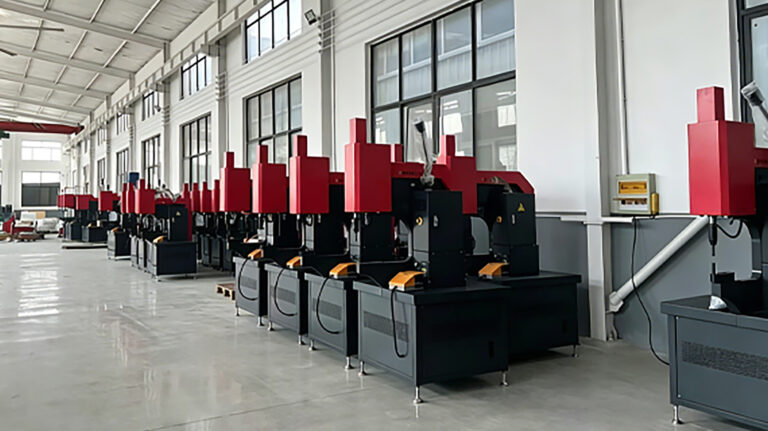
In the operation of pneumatic riveters, besides requiring the substrate to have a reasonably matched combination of sufficient strength and toughness, the surface properties of the substrate are crucial to the working performance and service life of the mold. These surface properties include wear resistance, corrosion resistance, friction coefficient, and fatigue performance. The improvement of these properties is very limited and uneconomical if relying solely on the enhancement of the substrate material. However, through surface treatment technology, one can often achieve twice the result with half the effort, which is precisely the reason why surface treatment technology has developed rapidly.
The surface treatment technology for pneumatic riveters is a systematic process that changes the morphology, chemical composition, microstructure, and stress state of the mold surface through surface coating, surface modification, or composite treatment techniques to acquire the desired surface properties. In terms of the methods of surface treatment, they can be divided into chemical methods, physical methods, physico-chemical methods, and mechanical methods. Although new treatment technologies aimed at improving mold surface properties are continuously emerging, in mold manufacturing, the most commonly used methods are nitriding, carburizing, and hard coating deposition.
Nitriding processes include gas nitriding, ion nitriding, and liquid nitriding, and each nitriding method has several specific techniques to meet the requirements of different steel types and workpieces. Since nitriding technology can form a surface with excellent properties, and the nitriding process coordinates well with the quenching process of mold steel, while nitriding is performed at a low temperature and the molds require no intense cooling afterward, resulting in minimal deformation, nitriding was adopted early for mold surface strengthening and is widely used.
The purpose of mold carburization is primarily to improve the overall strength and toughness of the mold, meaning that the working surface of the mold has high strength and wear resistance. The technological approach introduced is to replace higher-grade materials with lower-grade materials through carburizing and quenching, thereby reducing manufacturing costs.